All programs

Home balance practice: 4 weeks with support

Export PDF

At home · Free program

Home balance practice: 4 weeks with support

Three 10-minute routines a week beside a stable support, for adults who walk independently. Gentle control and coordination practice; not a rehabilitation plan.

  • 4 weeks
  • 2 phases
  • 3 sessions / week
  • 10 min / session
  • Beginner
  • No equipment

By PROGRAM editorial team · Updated on 02 Nov 2026

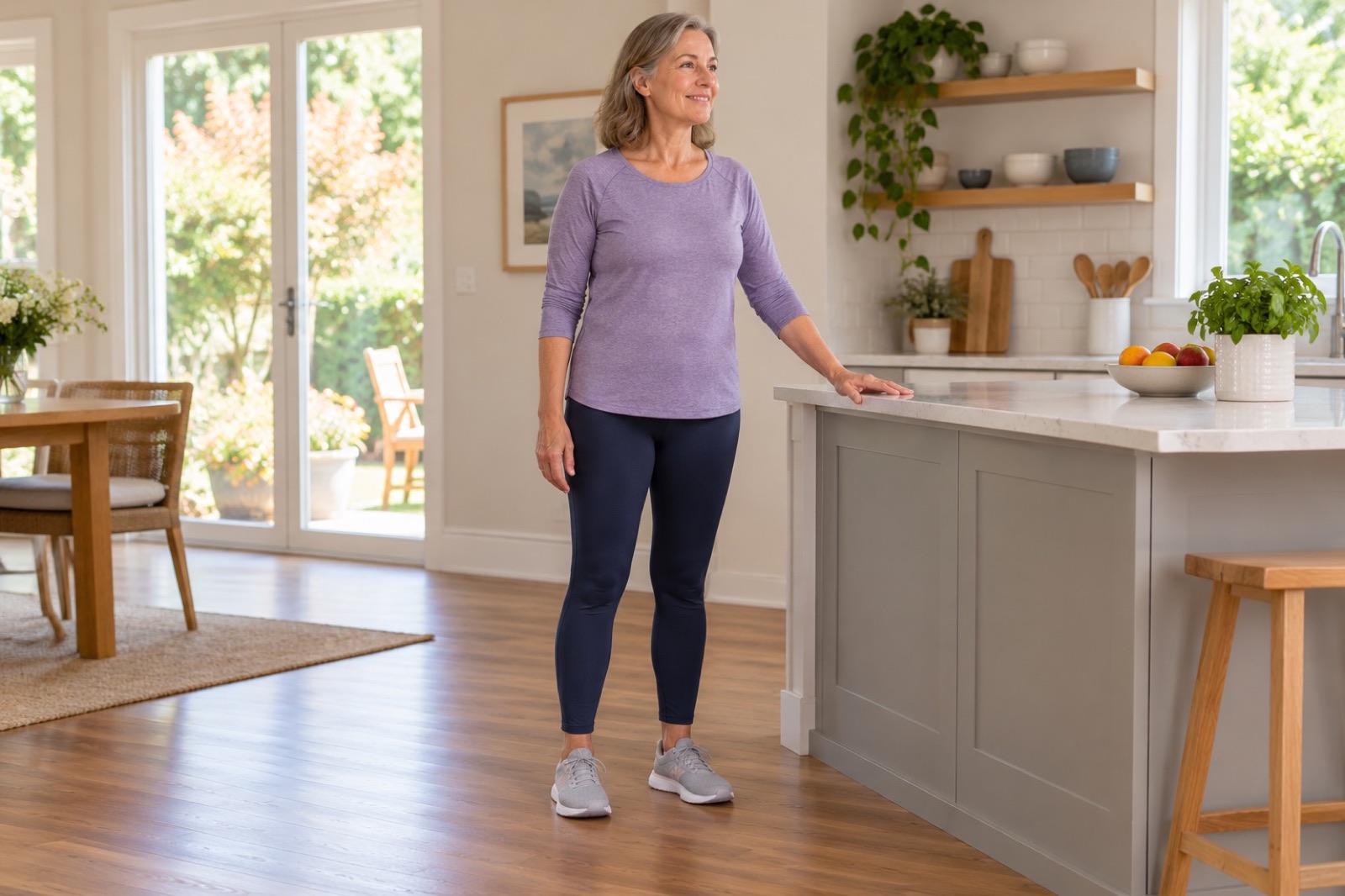
Balance practice beside a stable support.

Tick off your exercises as you go: it is saved on this device.

2 weeks

Weeks 1–2 — Find stable footing

One routine Monday, Wednesday and Friday. Keep support within reach and eyes open.

Coach's note

Audience and setup

For adults able to walk independently and stand with support. Use a clear, non-slip floor, stable shoes and a fixed counter; no wheeled chairs. This does not treat falls, dizziness or neurological conditions. If you have fallen, often lose balance or need walking assistance, get exercises tailored before trying them. Stop for pain or feeling unwell. Displayed age and sex are fictional format metadata.


Coach's note

Progression and method

Start with full support. Aim for consistency rather than instability. These exercises complement walking and strength work rather than replacing them.

Workout

Routine to repeat three times a week

Walk easily for two minutes, practise for about seven minutes including transitions and rests, then finish with one gentle minute of walking. Finish early if needed; never force practice to fill time.

  1. 01Side steps beside a counter1 × 8 steps / directionRest 20–30 sUse small uncrossed steps; keep a hand near support.
  2. 02Supported heel-to-toe walk2 × 5 pasRest 20–30 sLook ahead; keep fingers on support as needed.
  3. 03One-leg stand with hand support3 × 5 s / sideRest 10–20 sStay close to support; lower the foot before wobbling.

Habits

Make it easier

  • If heel-to-toe walking feels unstable, space the feet farther apart. For one-leg standing, keep the other toes on the floor.
  • Keep your eyes open. Use support as long as needed; increasing difficulty is optional.
Duplicate this program